
Adult & community groups
Guided visits can focus on architecture, restoration, decorative schemes, social history, collections or the garden.
Start an enquiry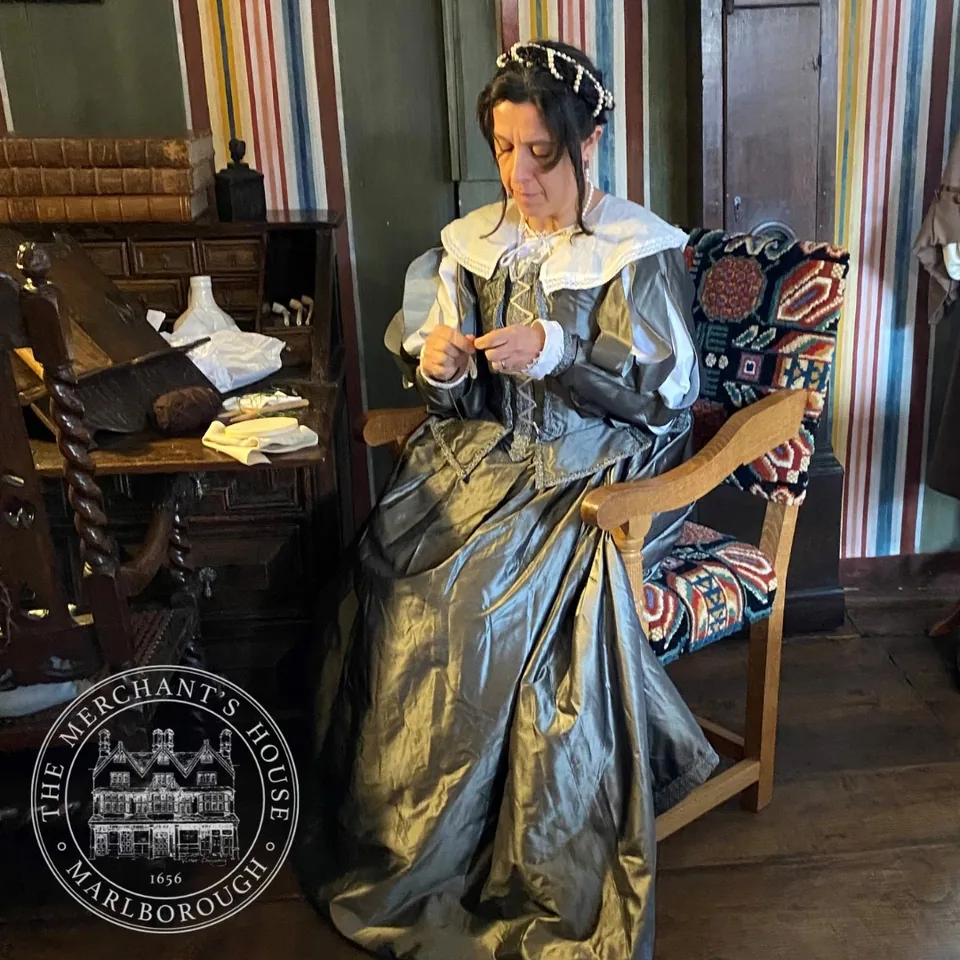
Groups & schools
Arrange an expert-led experience for societies, schools, colleges, community groups and tour operators.
Visits can be shaped around the age, interests and practical needs of the group.
Guided visits can focus on architecture, restoration, decorative schemes, social history, collections or the garden.
Start an enquiryDiscuss age-appropriate sessions linked to the Great Fire of Marlborough, domestic life, trade, material culture and local history.
Start an enquiryShare the preferred date, arrival window, party size, transport plan, access needs and required turnaround time.
Start an enquiryLearning approaches
Rather than treating the photographs as decoration, each one shows a distinct part of the learning experience: meeting people from the past, testing ideas with objects and connecting materials to Marlborough’s trading history.
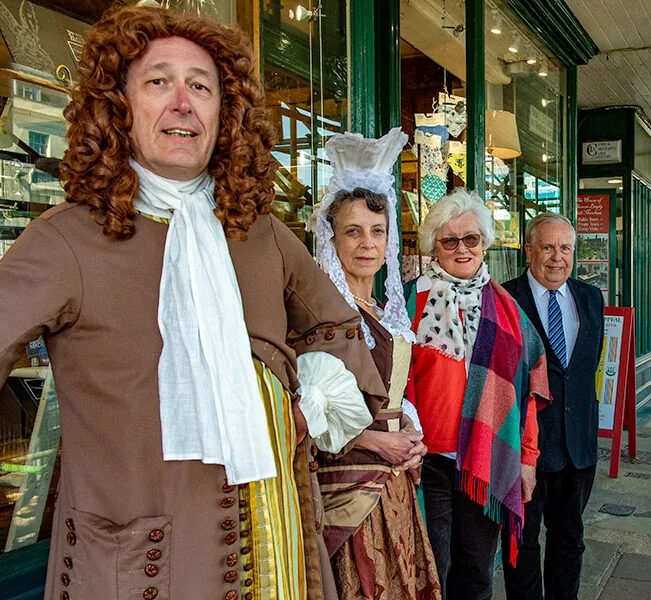
01 Welcome and orientation
Meeting a costumed interpreter helps learners establish the date, the Bayly household and the setting of Marlborough High Street before they move through the historic rooms.
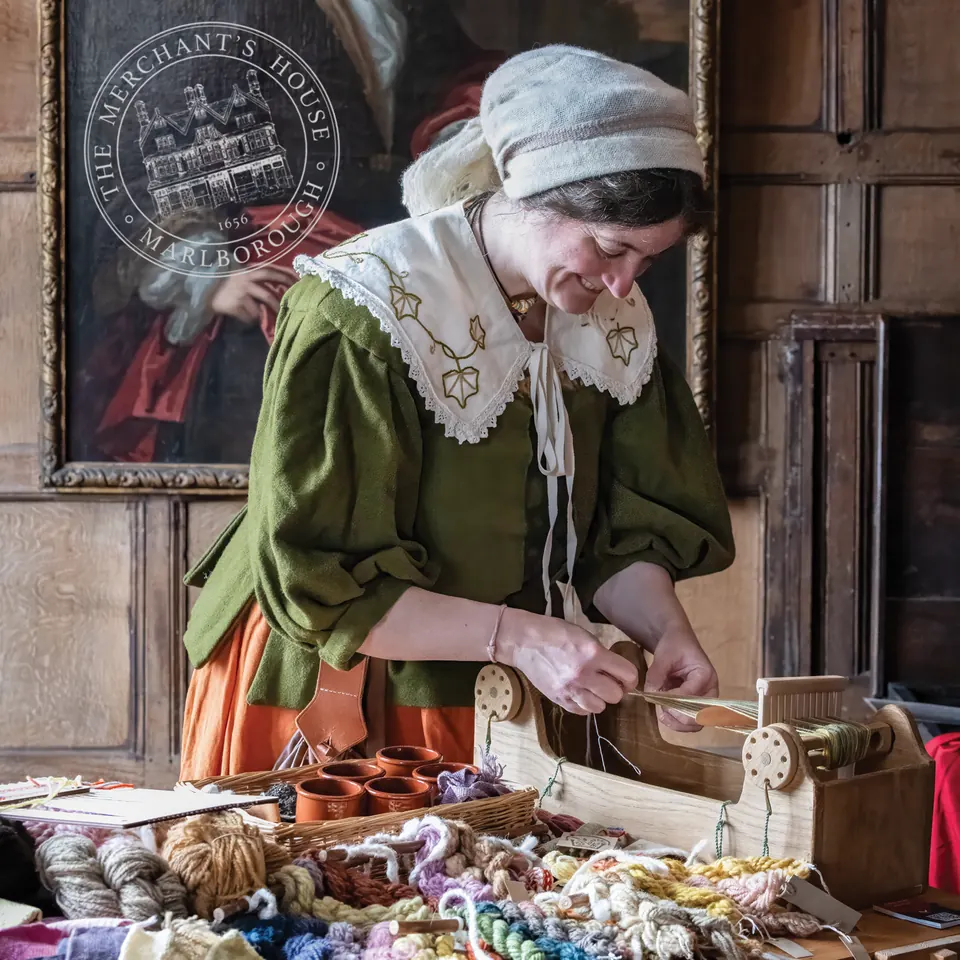
02 Object-based learning
Demonstrations turn unfamiliar tools into evidence. Learners can infer how an object worked, who might have used it and what skill, time or labour it required.
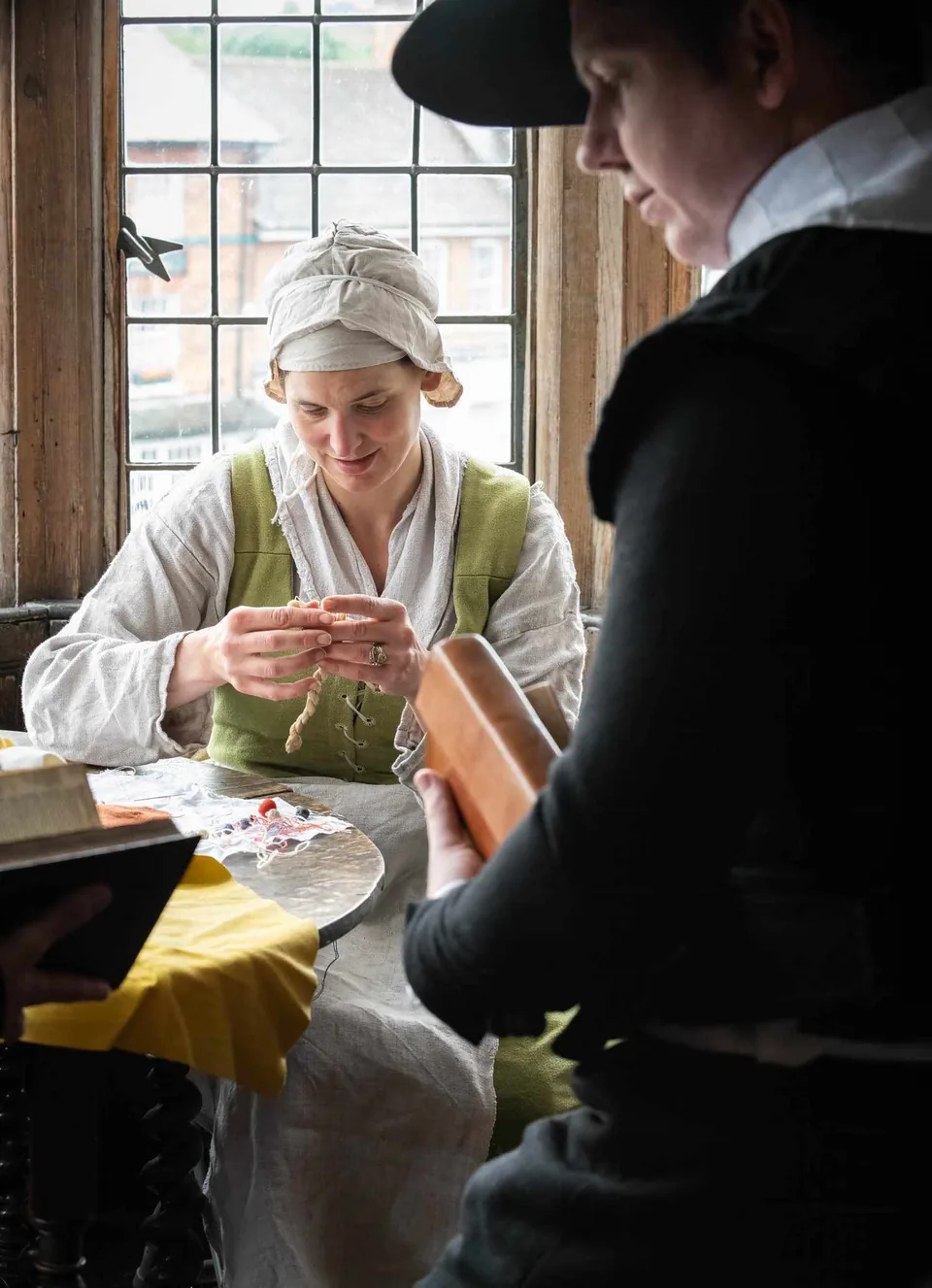
03 Trade and materials
Clothing, fibre and colour create a practical route into Thomas Bayly’s business, the household’s wealth and the bright decorative world of the house.
Group enquiry
Tell us who is coming, when you would like to visit and what would make the day work well.
Prefer to talk?01672 511491
A house worth keeping
Visits, donations, memberships and volunteer time all help protect this remarkable place and share it with future generations.